The Guide Issue 13
A Fragrance Wardrobe: How Many Perfumes You Actually Need
How to build a fragrance wardrobe comes down to three bottles chosen on purpose: one for the day, one for the evening, and one for the weather you live in.
A fragrance wardrobe is three bottles chosen on purpose: one for the day, one for the evening, and one for the weather you live in. A collection is bottles you own; a wardrobe is bottles you reach for, each for a reason you could say out loud. Build it slowly, testers first, and let a fourth earn its place.
How to build a fragrance wardrobe comes down to three bottles chosen on purpose: one for the day, one for the evening, and one for the weather you live in. More than that is a pleasure rather than a need, and fewer than that asks one fragrance to do work it was not built for. The rest of this guide is how to choose the three, in what order, and when a fourth and a fifth earn their place.
A wardrobe is not a collection. A collection is bottles you own; a wardrobe is bottles you reach for, each for a reason you could say out loud. This guide is for someone starting from one bottle or none, and it builds slowly, with testers first, because the point is not to own more but to be dressed for the day.
The Case Against One Signature Scent
A single fragrance worn every day is a fine thing, and it has two costs. The first is that no one composition suits a cold morning, a warm afternoon and a late dinner equally; a fragrance built for the evening is too much at a desk, and one built for the desk is too little at the table. The second cost is quieter: your nose stops noticing a fragrance you wear without pause, which the nose-fatigue article explains, and the usual response, spraying more, makes it worse for everyone but you. Two or three fragrances worn in turn keep each one new enough to notice, which is the kindest thing you can do for the first.
One fragrance is a signature. Three are a wardrobe. The difference is not the number but the reason each one is there.
The Three Bottles
Choose them by job, not by family, and let the family follow.
The Day
Worn to work, in meetings, on trains, in rooms with other people. It should stay within arm’s length and read clean. In the house that is a fresh or lightly woody composition: LUCIDE’s bergamot and black tea, KNIGHT’s green apple and sage, NOBLE’s grapefruit and nutmeg, or, for a floral, MYSTERIA’s orange blossom and jasmine. One spray, low.
The Evening
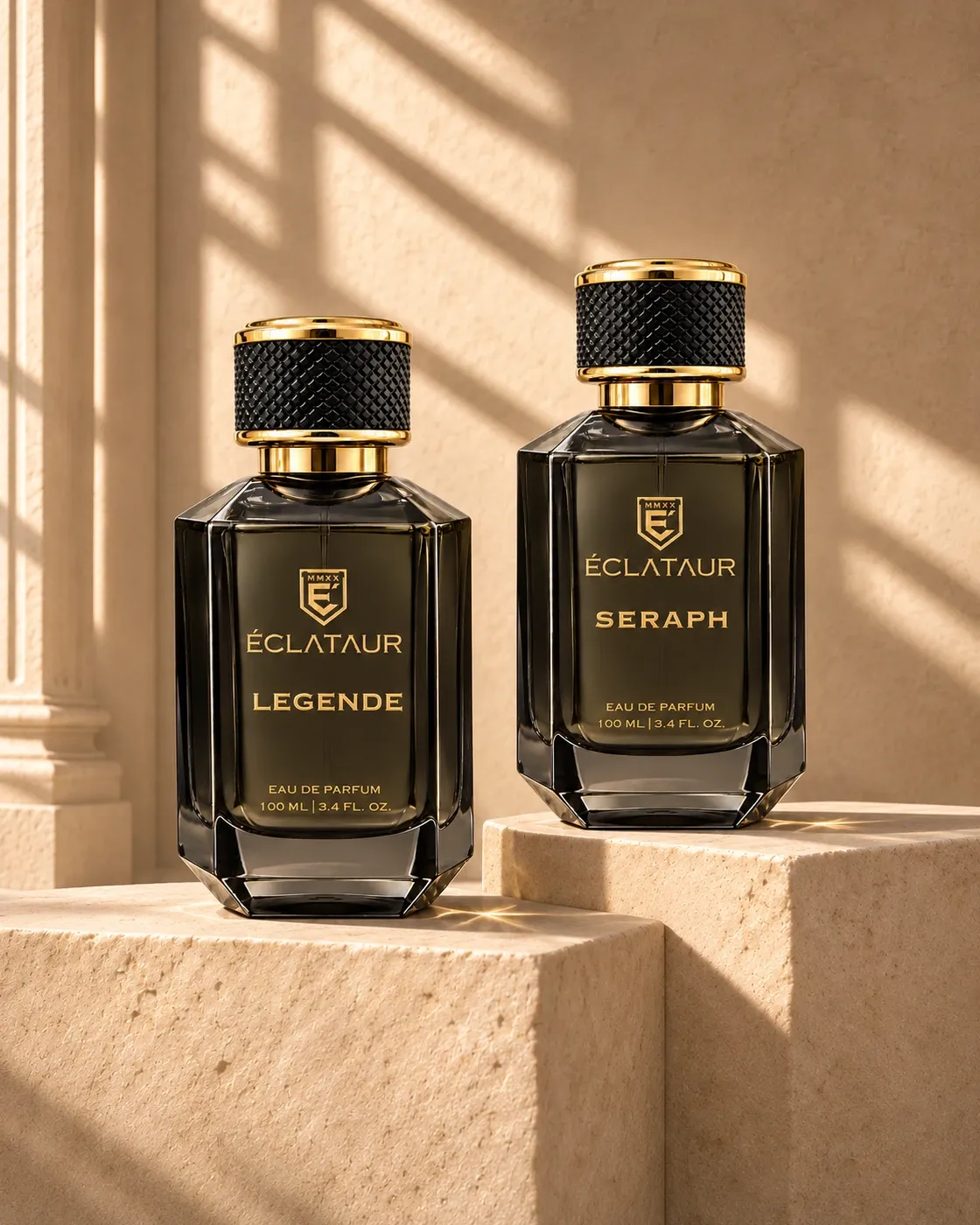
Worn to dinner, to a gallery, to a wedding, in rooms where warmth is welcome. It can project, and it should still smell of itself at the last hour. In the house that is an amber or a gourmand: CLARTE’s amber musk, BRUME’s sandalwood and labdanum, SERAPH’s cocoa and rose, NEXUS’s tobacco and honey, FLARE for the formal night. Still one spray, placed where it will rise.
The Weather
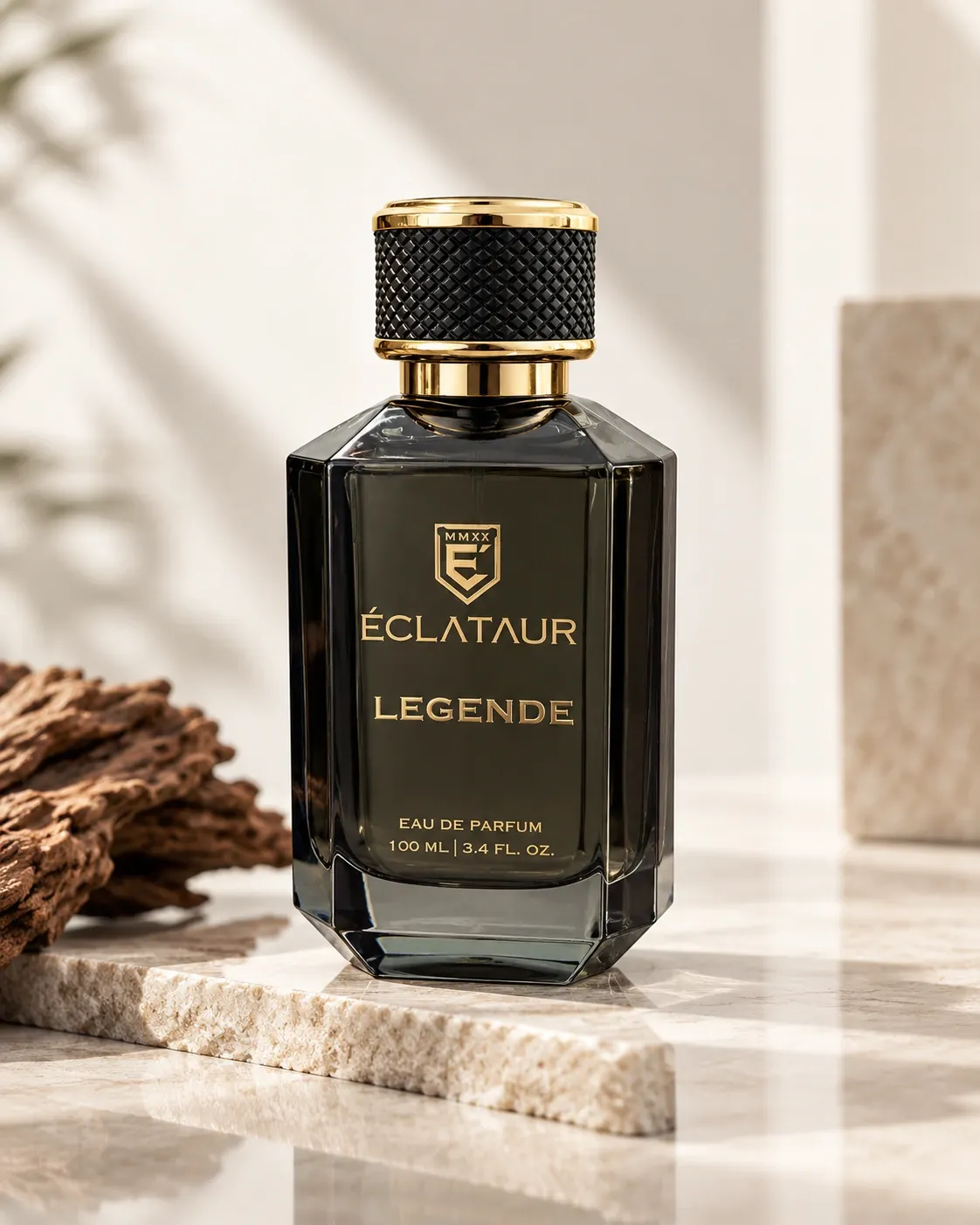
The one your climate asks for. In a hot place that is a bright citrus or an aquatic for the months when an amber is too much: AQUA, LEGENDE, DESIRE. In a cold place it is the opposite, a resinous or spiced warmth for the months when a citrus disappears: EMBER, FORTUNE, AZUR. In Texas, it is the summer bottle; the hot-weather guide is about exactly that.
Three bottles built this way cover nearly every day of the year, and they are different enough from each other that none goes quiet. If the day and the evening bottle happen to be the same scent in two forms, a spray for the day and its roll-on for close evenings, that is a wardrobe too: The Ritual is built that way, and the oil versus spray guide explains why the two forms behave so differently.

Three Wardrobes From the House
To make the three jobs concrete, here are three wardrobes built entirely from the collection, each with a reason said out loud. For someone who works in an office and dines out: KNIGHT by day, clean and within arm’s length; CLARTE for the evening, an amber musk that warms as the night goes on; LEGENDE for the heat, built for spring and summer. For someone who wants florals through the day and warmth at night: MYSTERIA by day, orange blossom and jasmine made for mornings and brunches; SERAPH for the evening, cocoa and rose; DESIRE for the warm months. For anyone, any collection: LUCIDE by day, BRUME by night, AQUA when it is hot. None of the three sets shares a family across its bottles, and none of its bottles goes quiet, because each is worn for a reason the others cannot serve.
When a Fourth and a Fifth Earn Their Place
A fourth bottle is for the occasion the three do not reach: the formal evening that wants something denser than the everyday evening (FLARE, or ÉCLAT in its small runs), or the season the weather bottle does not cover if you live somewhere with real winters and real summers both. A fifth is for the person who has found that two of the three keep arguing and wants one in between, a fougère such as PULSE, say, that is warm enough for an autumn day and clean enough for the office.
Beyond five, you are collecting, which is a fine thing to do on purpose and a poor thing to do by accident. The test for any bottle after the fifth is the same as for the first three: say out loud what it is for. If the sentence does not come, the bottle is a collection, not a wardrobe.
How to Build It Slowly
Start with testers, not bottles. The house’s Prelude puts up to five testers on one tray; choose one candidate for each of the three jobs plus two for curiosity, wear each through a full day in the situation it is for, and let the evenings decide. The testing guide sets out how to do that fairly, and the finder quiz is a reasonable way to pick the five candidates if you do not know where to begin.
Then buy the bottle you reached for most, and only that one. Live with it for a season. The second bottle should be chosen against the first, for the days the first could not do; the third against both. A wardrobe built this way takes a year and fits, which is more than can be said for most shelves. The house’s The Pair exists for the moment the second is chosen: any two bottles, bought together.
Keeping a Wardrobe Honest
Three habits keep a wardrobe from turning into a shelf. Rotate on purpose rather than by mood, so that each bottle gets worn and none goes stale in the dark; the storage guide covers keeping the ones you are not wearing. Layer only within the house’s tested pairings, which are printed on each page and explained in the layering guide, since two fragrances layered badly are a reason to buy a third. And when a bottle stops earning its sentence, give it away rather than keeping it as furniture; a fragrance is for wearing, and the wardrobe that results from honesty is the one that gets used. Once a year, in the week the weather turns, is a good time to ask each bottle its question again: the day bottle may have become an evening bottle as the taste behind it changed, and a wardrobe that is allowed to move is one that keeps fitting.
For a broader view of how fragrances are classified, Britannica’s entry on perfume is a sound starting point, and Fragrantica remains the most useful public record of how wearers build their own.
How to Build a Fragrance Wardrobe: Your Questions Answered
How many perfumes should I own?
Three, chosen on purpose: one for the day, one for the evening, and one for the weather you live in. A fourth covers the formal occasion or the missing season and a fifth the gap between two of the three. Beyond that you are collecting, which is fine when it is done on purpose.
Is it better to have one signature scent or several?
Several, worn in turn. One fragrance cannot suit a desk, a dinner and a hot afternoon equally, and a fragrance worn without pause goes quiet to your own nose, which tempts you to overspray. Two or three in rotation keep each one noticeable and each one appropriate.
What should the first perfume in a wardrobe be?
The day bottle, because it is the one worn most: something clean that stays within arm’s length, a fresh citrus, a light wood or a quiet floral. Choose it from testers worn through real working days, then buy only that one and live with it for a season before choosing the second.
Should the bottles in a fragrance wardrobe be from different families?
Usually, because different jobs call for different families: fresh or woody for the day, amber or gourmand for the evening, citrus or aquatic for heat. But choose by job and let the family follow; a wardrobe of three ambers is honest if every evening of your year is cold.
Can one scent in two forms count as a wardrobe?
Yes. A spray for the day and the same scent’s roll-on for close evenings behave differently enough to do two jobs: the spray projects, the oil stays within arm’s length and lasts quietly. The Ritual pairs a spray with its roll-on for exactly this.
How do I build a fragrance wardrobe without wasting money?
Testers first, one candidate per job, worn through real days. Buy the one you reached for most, live with it for a season, then choose the second against it and the third against both. A wardrobe built over a year fits; one bought in an afternoon becomes a shelf.