The Guide Issue 09
What Amber Means in Perfume, and Why the House Makes It Five Ways
What does amber smell like in perfume? Warm, resinous and faintly sweet, like honey over sun-warmed resin, because amber is a built accord, not a fossil.
Amber in perfume smells warm, resinous and faintly sweet, like honey over sun-warmed resin, because amber is a built accord rather than a single material: resins such as labdanum and benzoin in the classic version, ambroxan and amberwood in the modern mineral ones. Five fragrances in the collection are ambers, and they smell nothing alike.
What does amber smell like in perfume? Warm, resinous and faintly sweet, like honey over sun-warmed resin, because amber is a built accord, not a fossil. No perfume contains the golden stone from the jewellery counter, which has almost no scent of its own. What perfumers call amber is a blend of resins, balsams and sweet materials that together give a fragrance its glow, and every house builds that blend its own way.
Amber is the word on a perfume page that most people picture wrongly and most houses explain least. This guide says what the accord is made of, how the modern mineral ambers differ from the old resinous ones, what amber does on skin through the day, and why five fragrances in this collection can all be ambers and smell nothing alike. It ends with how to choose between them.
What Amber Is in Perfume
Amber in perfumery is an accord: several materials blended so that they read as one new smell, the way a chord reads as one sound. The classic version rests on three families of material, and nearly every amber you have ever worn leans on at least two of them.
Labdanum
A dark, leathery resin from the rockrose shrub, and the backbone of the accord: amber before amber had a name. Labdanum smells of warm skin, dried fruit and a little smoke, and it is what keeps an amber from turning into plain vanilla. It sits in the base of CLARTE, BRUME and ÉCLAT.
Benzoin and the Balsams
A balsamic resin from Styrax trees, sweet and softly vanillic, with the patience of honey. Benzoin, and its relatives fir resin and opoponax, round labdanum’s edges and give the accord its glow. BRUME carries benzoin in its base; EMBER takes fir resin in the same place.
Vanilla and Tonka
The sweet edge. Vanilla and tonka bean soften the resins and carry the warmth into the last hours of the wear. Too much and an amber becomes a gourmand; just enough and it reads as skin that has been in the sun. CLARTE rests on both.
Amber is not a thing you add. It is a warmth you build, and every house builds it to its own taste.
The Modern Ambers: Ambroxan, Amberwood and the Ambergris Accord
A second kind of amber arrived with modern chemistry, and it is the one behind most of the fragrances called amber in the last twenty years. It is drier, cleaner and more mineral than the resinous kind, and it lasts on skin in a way the old materials cannot.
Ambroxan
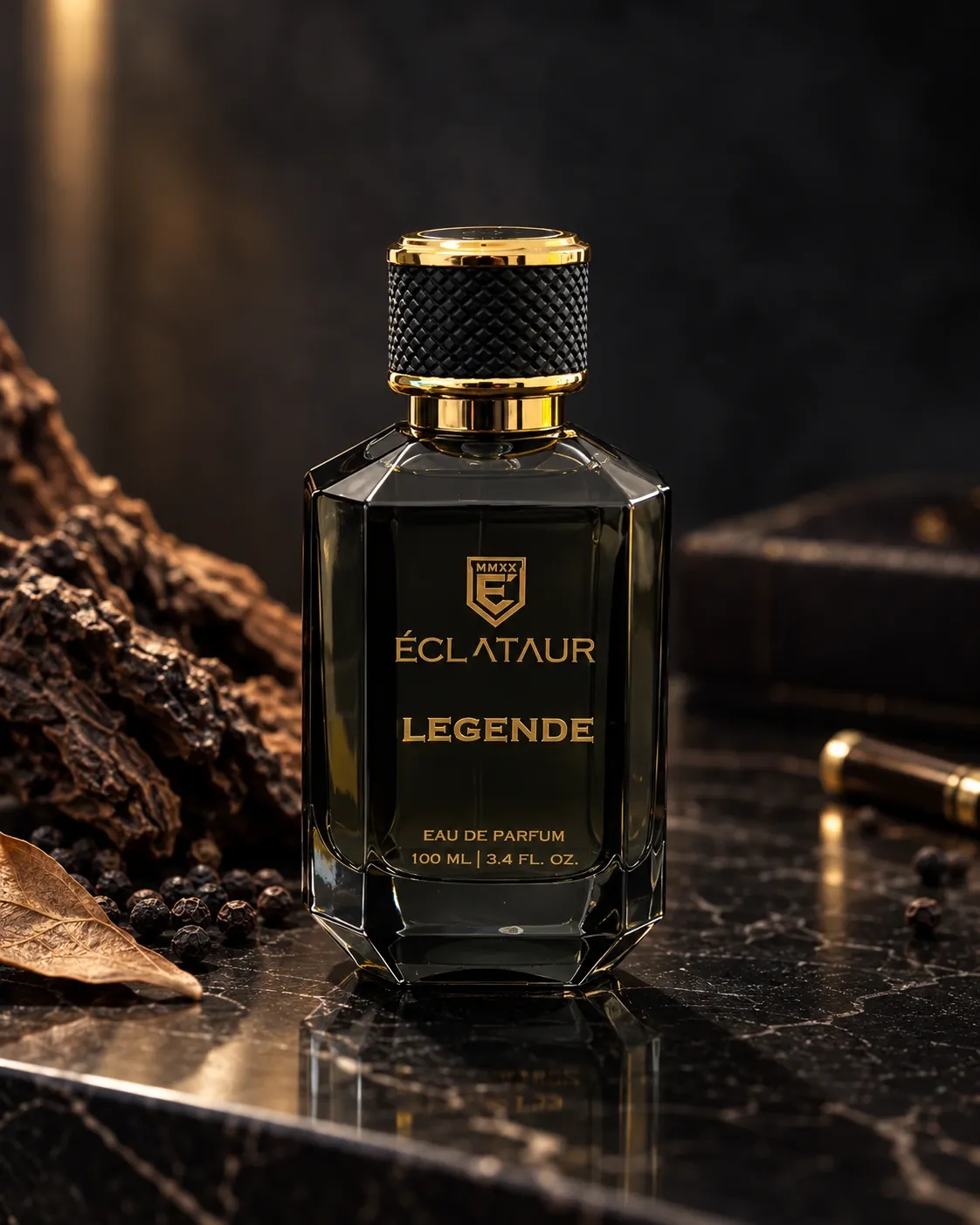
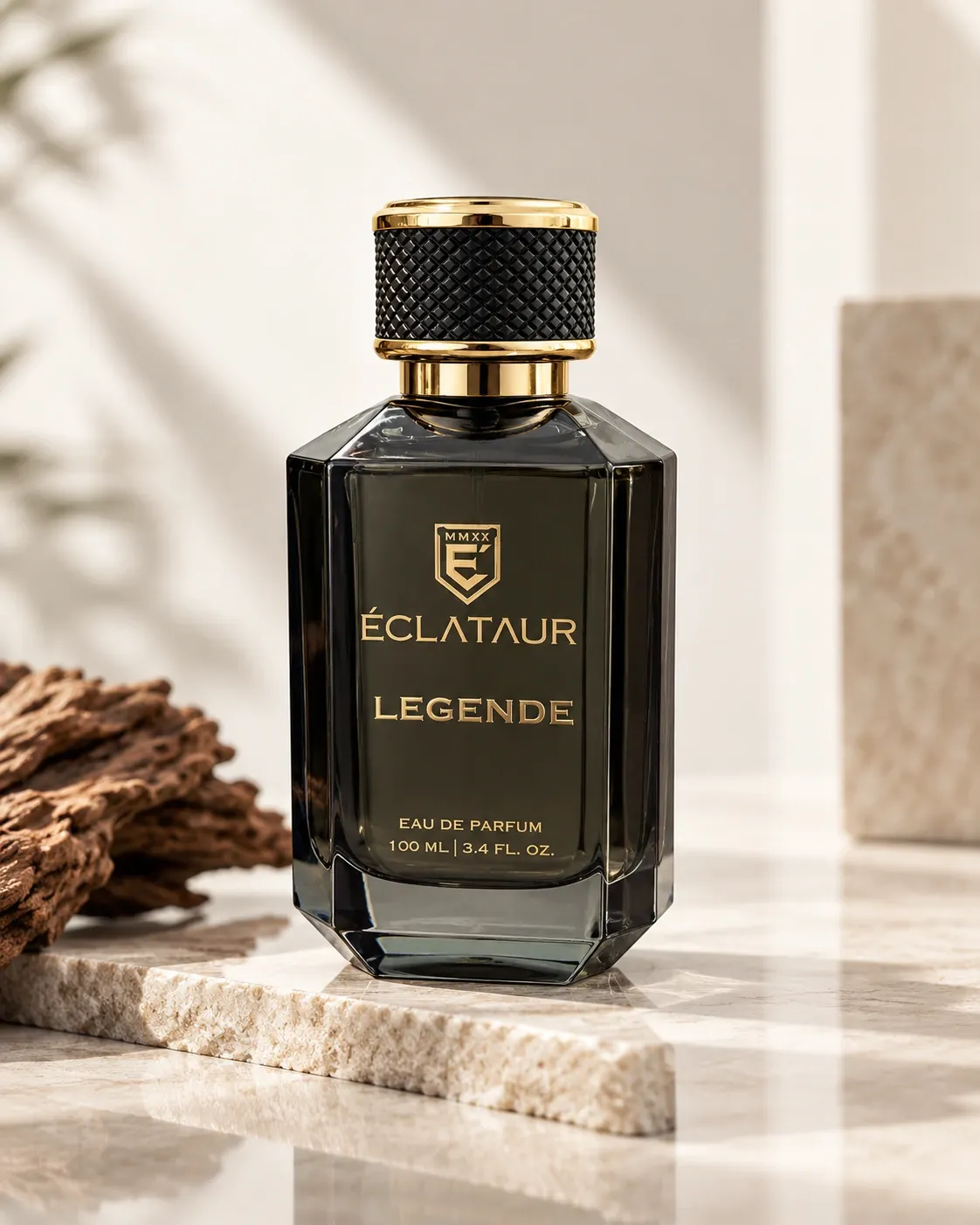
A crystalline modern material with a dry amber glow and remarkable persistence, first made as a stand-in for the scent of natural ambergris. Mineral light that lasts until morning. It is in the base of EMBER, FLARE, LEGENDE and LUCIDE, and it is why a bright citrus can still read warm in the evening.
Amberwood
Where wood ends and glow begins: a modern woody-amber material, warm, radiant and long-lasting, with none of the resinous sweetness of labdanum. It sits in EMBER’s heart and gives the fragrance its shimmer, the quality the house describes as luminous rather than rich.
The Ambergris Accord
Ambergris is the sea, remembered by a stone: a salty, skin-warm marine note that modern perfumery renders with safe equivalents rather than the animal original. It is not amber at all, despite the name, but it is the mineral note that gives FLARE and EMBER their dense, almost salted quality under the warmth.
The confusion in the word comes from history. Ambergris, from the sea, and amber, the fossil resin, shared a name for centuries. Perfumers borrowed the colour and the warmth of the stone to name a resinous accord, then later borrowed the smell of the sea-stone for the mineral materials. A modern amber fragrance may lean on either, or on both, which is the first thing to know when two bottles called amber smell nothing alike.
What Amber Smells Like on Skin
An amber opens quietly. The accord lives in the heart and base of a composition, so the first moments on skin usually belong to whatever sits above it: citrus, pepper, saffron, a flower. The amber rises as those leave, and it is the part of the fragrance that stays closest and longest.
Resinous ambers read as warm, sweet, faintly smoky and skin-like, and they deepen as the day goes on. Mineral ambers read as dry, radiant and clean, closer to warm stone than to honey, and they hold their shape rather than deepening. Most ambers worth wearing are a weighting of the two. What distinguishes one house’s amber from another’s is that weighting, and what the perfumer sets beside it.
Five Ambers From One House
The collection carries five fragrances in which amber is the subject, and they differ in exactly the way the materials above would predict. Each note here is from the fragrance’s own page.
CLARTE: The Amber Musk
Bergamot, bitter orange, cardamom, pink pepper and grapefruit over an amber accord with blonde tobacco, saffron, jasmine and sandalwood, on white musk, tonka, Madagascar vanilla, cedarwood and labdanum. The classic resinous amber, made clean by the musk and bright by the opening. CLARTE, also as a roll-on.
EMBER: The Saffron Amber
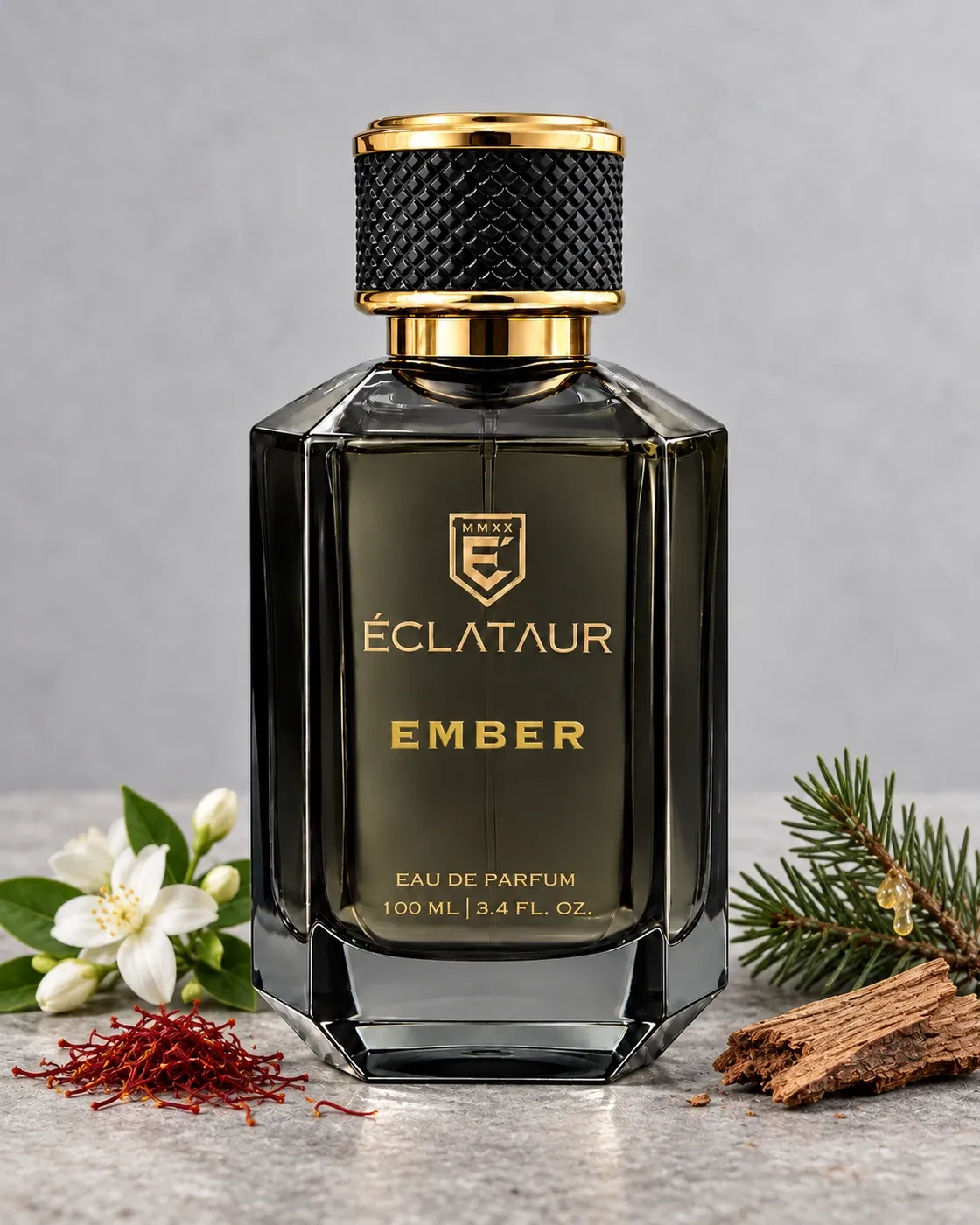
Jasmine and saffron over ambergris, amberwood and hedione, on ambroxan, fir resin, oakmoss and Virginian cedar. A modern amber almost entirely of the mineral kind, radiant and luminous, with the fir resin the one nod to the old balsams. Built for the office as much as the evening. EMBER, also as a roll-on.
FLARE: The Royal Amber
Bitter almond and saffron over Egyptian jasmine and Virginia cedar, on an ambergris accord, ambroxan, cashmeran and white musk. Dense, mineral and opulent: the amber for galas and ceremonies, with the almond lending a powdered, bittersweet edge no other amber here has. FLARE, also as a roll-on.
BRUME: The Resinous Amber
Bergamot, pink pepper and saffron over Mysore sandalwood, an amber accord and cashmere wood, on labdanum, oud, benzoin and white musk. The most traditional of the five: labdanum and benzoin together, with the oud and sandalwood making it an oriental woody that behaves like incense in a closed room. BRUME, also as a roll-on.
ÉCLAT: The Smoky Amber
Pineapple, bergamot, blackcurrant and pink pepper over birch smoke, blonde tobacco, saffron and lavender, on oakmoss, sandalwood, tonka, labdanum and musk. An amber built as a chypre, with smoke where the sweetness would usually be. The house’s Édition Limitée, bottled in small runs. ÉCLAT.
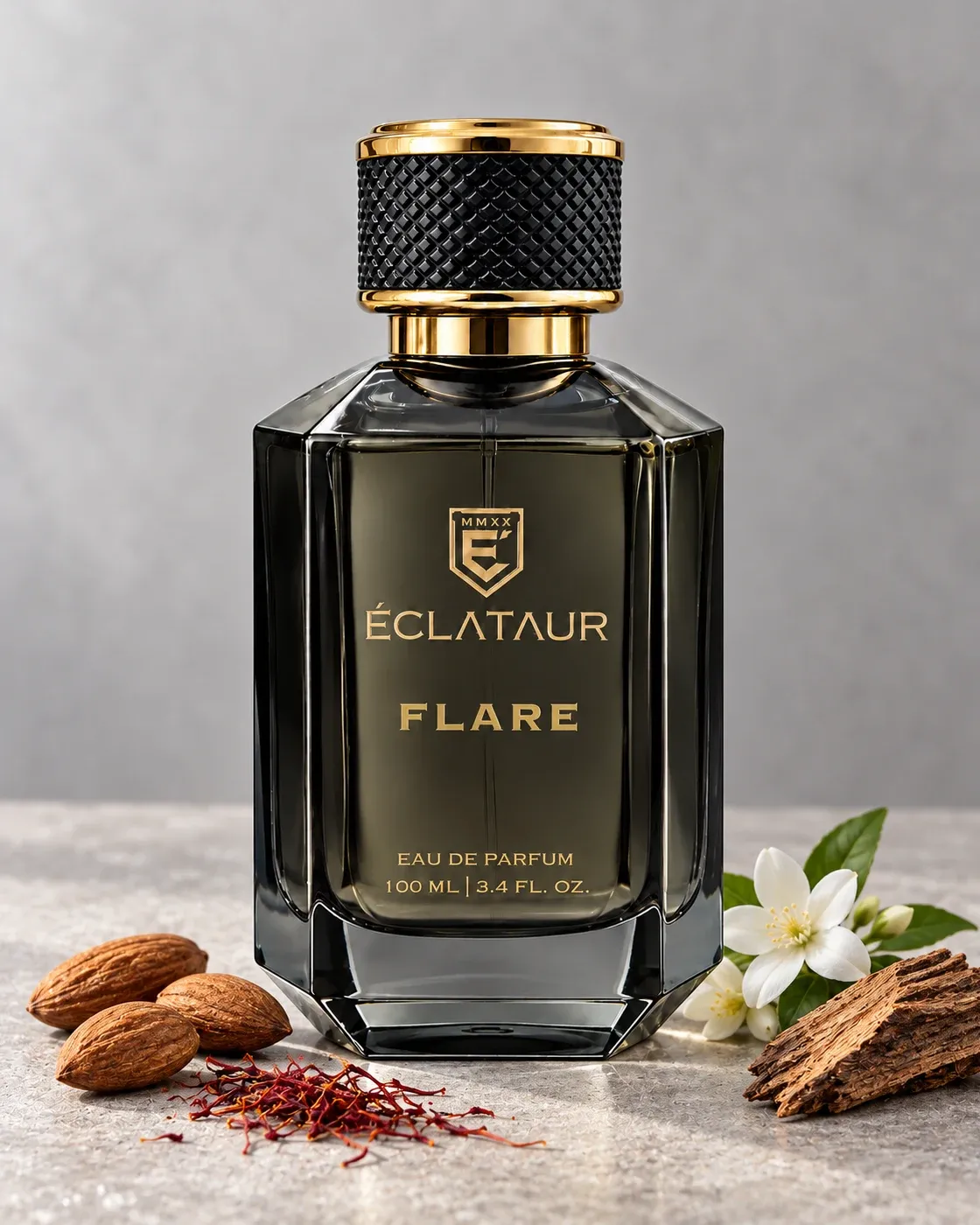
Saffron appears in all five, which is not an accident. Its dry, leathery warmth bridges the resinous and the mineral kinds of amber, and the house uses it as the thread that runs through its warm direction.
How to Choose Between Them
Choose by what sits beside the amber, because that is what you will notice. If you want clean and wearable every day, the musk of CLARTE. If you want radiant and modern, the saffron and ambergris of EMBER. If you want dense and formal, the almond and mineral weight of FLARE. If you want the old resinous warmth with incense behind it, BRUME. If you want smoke, ÉCLAT.
Season matters less for the mineral ambers than for the resinous ones: EMBER and FLARE are built for the whole year, while CLARTE, BRUME and ÉCLAT deepen in autumn and winter. The pairings the house has worn together are on each page; EMBER with FLARE or BRUME, and CLARTE with NEXUS, are the ones to start with, and the layering guide explains the rules behind them. If the direction matters more than the amber, the families guide is the better starting point, and the finder quiz will put you in front of one of the five in four questions.
Amber, Oriental, and the Words the Trade Uses
You will see these fragrances described as amber on one page and oriental on another, and both are correct. Oriental is the older family name for warm, resinous, spiced compositions; the trade has been moving toward amber as the family word for several years, and the house’s pages use both so that neither reader is lost. What has not changed is the structure underneath: resins, balsams, sweet materials and, in the modern versions, the mineral ambers, held together by whatever the perfumer sets above them.
For a broader account of how perfume families are drawn, Britannica’s entry on perfume is a sound starting point, and Fragrantica remains the most useful public record of how ambers are read by the people wearing them.
What Does Amber Smell Like: Your Questions Answered
What does amber smell like in perfume?
Warm, resinous and faintly sweet, like honey over sun-warmed resin, with a smoky or skin-like edge depending on the blend. Modern mineral ambers built on ambroxan read drier and cleaner, closer to warm stone. Most ambers worth wearing combine the two.
Is amber a note or an accord?
An accord: several materials blended to read as one smell. The classic amber rests on labdanum, benzoin or another balsam, and vanilla or tonka. No single ingredient smells of amber on its own, and no perfume contains the fossil resin, which has almost no scent.
Is amber the same as ambergris?
No. Ambergris is a salty, skin-warm marine material, rendered in modern perfumery with safe equivalents, and amber is a warm resinous accord. They shared a name for centuries, which is why modern mineral ambers such as ambroxan, first made to imitate ambergris, now carry the amber word too.
What is ambroxan and why is it in so many perfumes?
A crystalline modern material with a dry amber glow and remarkable persistence, first made as a stand-in for natural ambergris. It lets a fragrance stay warm and present long after lighter notes have left, which is why it sits in the base of so many modern compositions, including EMBER, FLARE, LEGENDE and LUCIDE.
Is amber perfume only for winter?
The resinous ambers deepen in cold weather and are at home there. The mineral ambers, built on ambroxan and the ambergris accord, are dry enough to wear all year; EMBER and FLARE are both made that way. One spray, applied low, keeps any amber wearable in a warm room.
Which amber should I try first?
Choose by what sits beside the amber: CLARTE for musk and everyday wear, EMBER for saffron and radiance, FLARE for almond and formal weight, BRUME for resin and incense. The Prelude lets you wear up to five testers through a full day and decide on your own skin; ÉCLAT, the smoky one, is sold only as a bottle.