The Craft Series Issue 01
Maceration Perfume: Resting Before Release
Maceration perfume is the resting stage after blending and before bottling. At ÉCLATAUR every spray rests, is inspected and is evaluated before release.
Maceration in perfume is the resting stage after a composition is blended and before it is bottled. At ÉCLATAUR every spray rests in sealed amber glass at room temperature, is then chilled and cold filtered, and is inspected and evaluated before release. This is the house's account of what that stage does and what it refuses to claim.
Maceration perfume is the resting stage after blending and before bottling. At ÉCLATAUR every spray rests, is inspected and is evaluated before release. The batch is held in amber glass, kept in a dark cabinet at room temperature, and returned to at the bench until it passes its checks. Resting is the house’s production practice. It is not a universal chemical deadline, and it is not a promise that every fragrance improves by the same amount.
What happens between the moment a composition is blended and the moment it reaches a bottle is rarely described, partly because it is unglamorous and partly because it is hard to describe honestly. This is the house’s account of that stage: what it does, what it looks for, and what it refuses to claim.
What Is Maceration in Perfume?
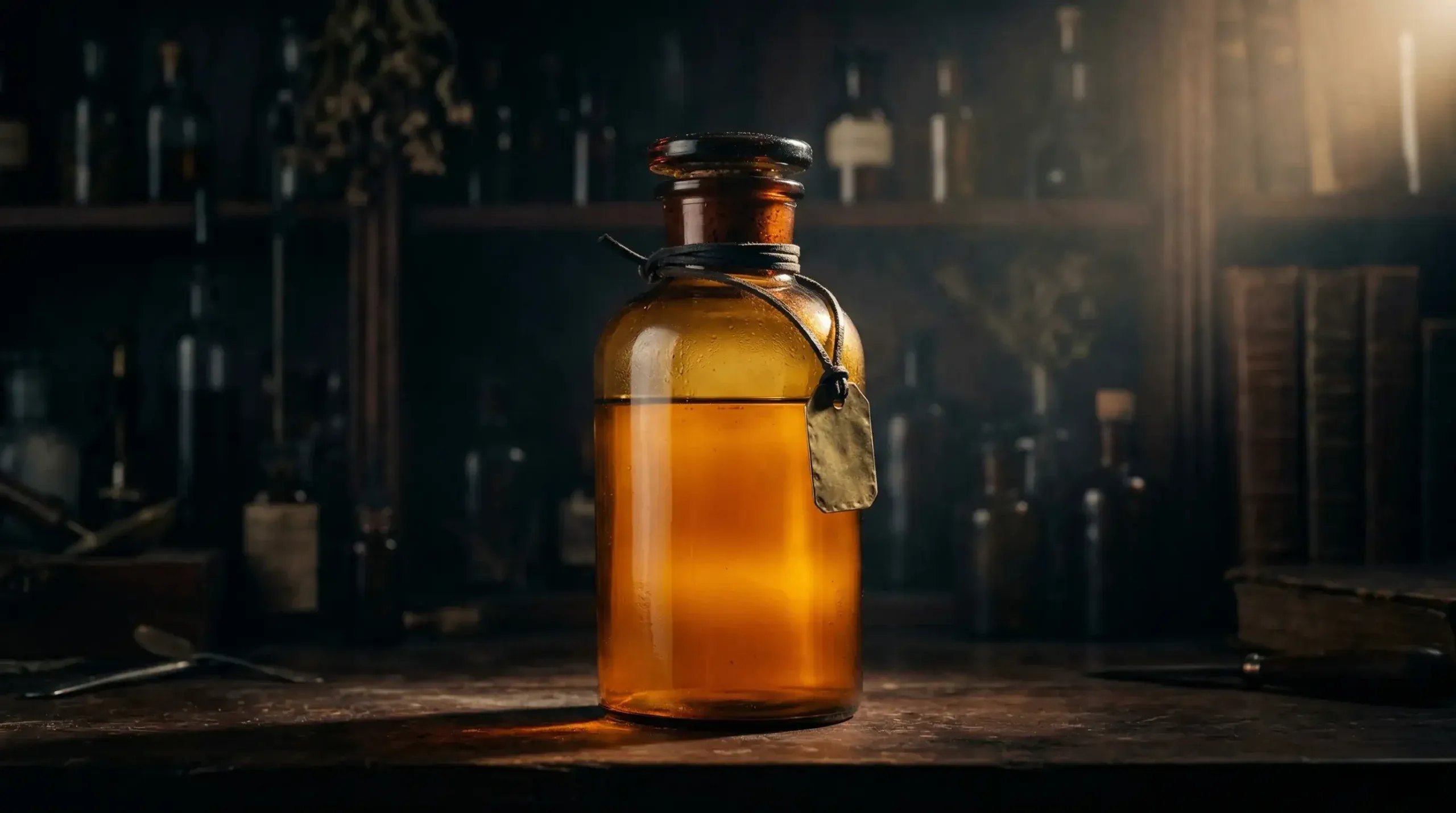
Here, maceration means the period after a spray is blended and before it is bottled. ÉCLATAUR holds every resting batch in amber glass, never clear glass. The amber shields the liquid from light, and the sealed bottles stay inside a dark cabinet at room temperature. Glass is the house’s preferred material for this stage, because it is inert and because it lets the perfumer see the liquid. Inspection and evaluation follow before release: time alone does not decide whether a batch is ready.
People use maceration, maturation and aging differently. In the trade, maturation often describes the concentrate resting before it meets its carrier, and maceration the finished blend resting afterwards; in everyday use the words are swapped freely. The distinction below is between the house’s pre-bottling process and the changes a customer might notice later in a finished bottle. It describes this workflow, not a vocabulary the whole industry has agreed on.
Before Bottling
In the Cabinet
The batch remains at the atelier. Its resting, storage and release checks belong to the production process, and the house keeps a record of them by lot. That record says more about how a batch was handled than a general promise that it has been aged.
After Purchase
In the Bottle
A finished bottle meets its own storage conditions. A change noticed at home does not establish what happened before bottling. Keep the bottle away from heat and sunlight, and judge how it wears rather than treating extra time as a guaranteed improvement.
Resting is not a number. It is a decision the perfumer makes at the bench, batch by batch, after looking.
What the House Looks for During Perfume Maceration
The useful observations at the bench concern appearance and scent. They guide a release decision without being laboratory measurements. A description such as “rounder” tells a reader what the perfumer noticed; it does not, by itself, demonstrate a chemical change or a measured increase in longevity.
Clarity
The liquid is inspected for haze and sediment. The early inspection and the later cold filtration are distinct steps. The aim is to find a problem in the cabinet, where it can be dealt with, rather than asking a customer to discover it in a finished bottle.
Character
The opening and the dry-down are evaluated as parts of one composition. The question is whether the batch has the character intended for that fragrance. A smoother opening is an observation of scent, not proof that every formula follows the same chemical timetable.
Consistency
The release check compares the composition with the previous batch of the same fragrance. Resting does not replace that comparison. If something seems wrong, the end of the scheduled rest is not a reason to bottle it anyway.
Why Every ÉCLATAUR Spray Rests Before Release
The house rests every spray batch before cold filtration and final evaluation, and it does so on a schedule it keeps for itself rather than publishes as a figure. No batch is released early because an order is waiting. A batch that needs further attention stays at the atelier until it passes, and a batch that does not pass is not bottled.
This is a house practice, not a claim that a particular length of rest is the scientifically established optimum for every perfume. The effect of resting depends on the formula and its conditions. This article does not supply a controlled study establishing a universal completion window, a chemical mechanism or a percentage gain in wear. It describes what the house does and what it looks for.
For the reader, the useful promise is specific: an ÉCLATAUR spray has been through the house’s resting and its checks before bottling, and needs no further time at home. The Prelude lets you judge a finished fragrance on your own skin before choosing a full bottle.
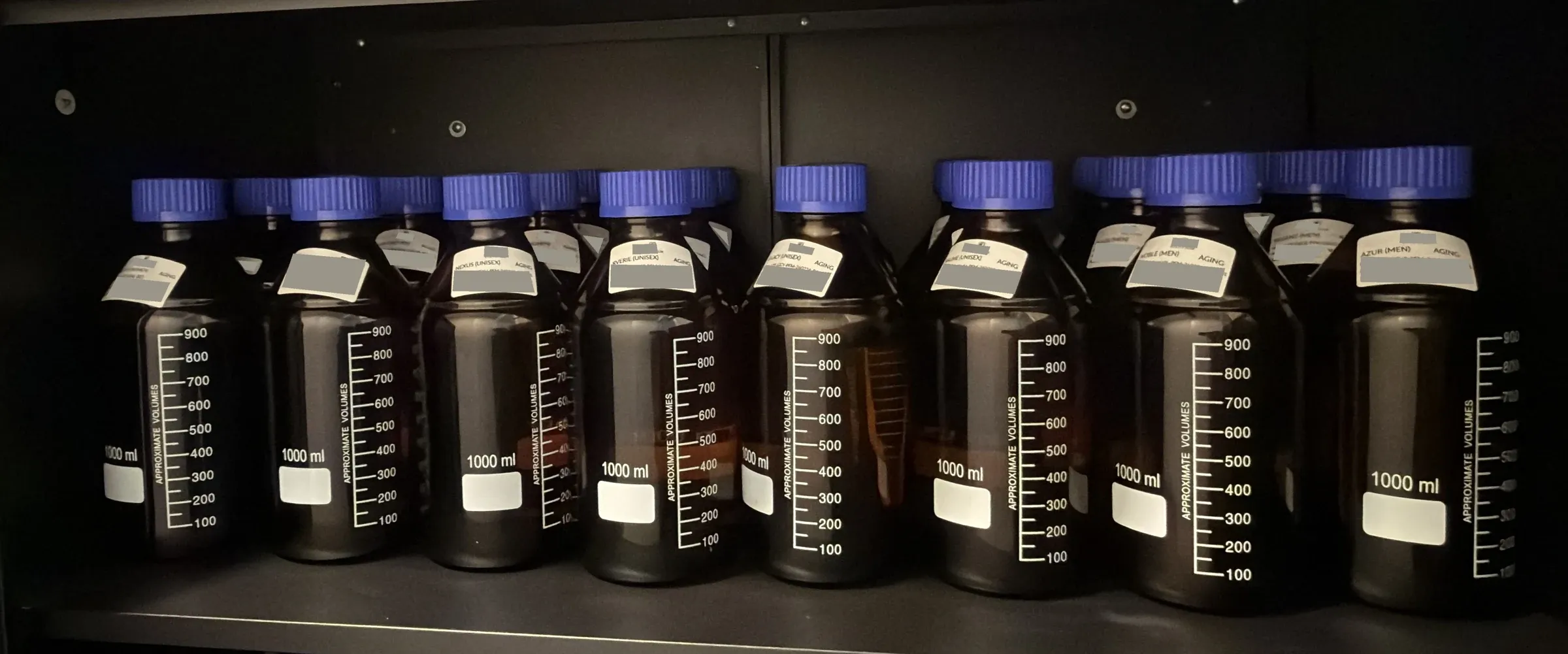
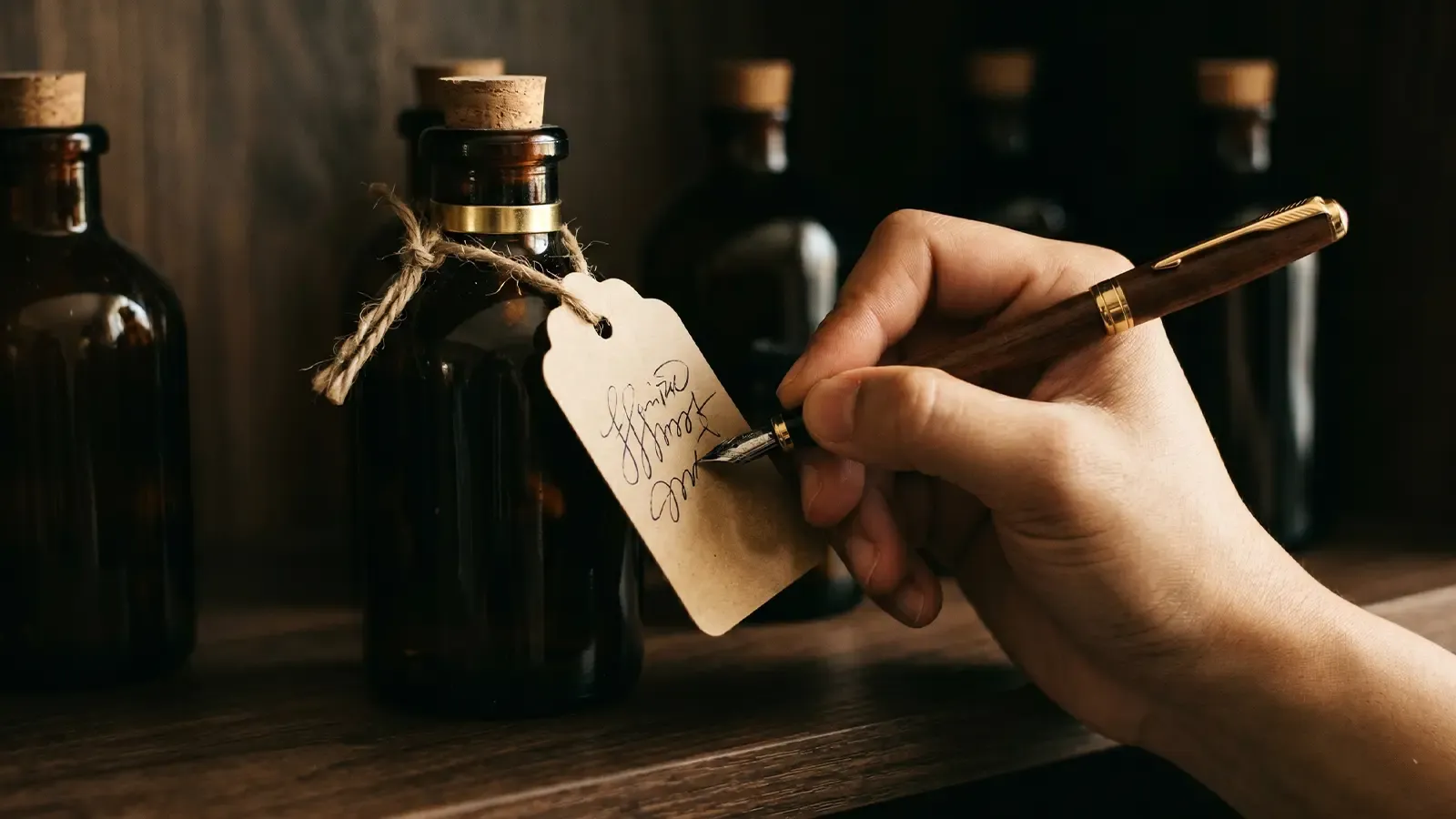
Inside the ÉCLATAUR maceration cabinet: fragrance batches resting before bottling. Private batch details on the labels have been concealed.
How the Maceration Perfume Process Actually Runs
The resting process at the atelier runs in four stages. Every batch is documented on a production record, traceable by lot code, and follows the same sequence whichever fragrance is in the glass.
Sealed and Shelved
The freshly blended spray is sealed in amber glass and placed in the dark cabinet at room temperature. The batch is kept as one production lot through the whole process rather than divided into finished bottles before its inspection and release checks.
The Early Inspection
Early in the rest the batch is opened, evaluated for clarity and checked for sediment. Some compositions throw a faint haze once they settle; when that happens the batch is filtered before continuing. Most pass clean. The step is short, but it means every batch enters the long rest after a look.
The Dark Rest
After the inspection the sealed batch returns to the cabinet for the remainder of its rest, away from light and unnecessary handling. This is the quiet part of the process. It is not a measurement of a specific reaction, and it is not a guarantee of a particular performance gain.
Cold Filtration and Release
At the end of the rest the batch is chilled and filtered cold, described below, and then evaluated: worn on skin from opening to dry-down and compared with the previous batch for consistency of character. Only after every check passes does it move to hand bottling. If something is off, it waits.
After Resting: Chilling and Cold Filtration
Once the rest is complete, the batch is chilled thoroughly, then passed through a filter while it is still cold. At the atelier this is the freeze-filtration stage, and it is distinct from resting: it does not replace the rest or the evaluation that follows.
The purpose is to remove particles and sediment, including material that separates out only when the liquid is cold, before the fragrance reaches a finished bottle. A batch filtered warm can look clear and still throw a haze later in a cool room; filtering it cold catches that first. The batch is checked for clarity after filtration and then goes to its final evaluation before hand bottling.
What the Perfumer Observes After Resting
The house’s bench account describes an early batch as having a more prominent alcoholic opening, with the parts easier to pick out separately. At the later evaluation the impression is more rounded and more cohesive, the opening leading into the heart rather than sitting on top of it. These are qualitative sensory observations: descriptions of what the perfumer looks for, not blinded test results or measurements of how much longer a fragrance lasts.
The distinction matters when reading about perfume anywhere. “Smoother”, “richer” and “more integrated” communicate an experience, but they are not units. To turn them into evidence of a repeatable change, a comparison would need stated conditions, comparable samples, a consistent method and the results. Those data are not presented here, so no percentage improvement is claimed.
The amber and musk of CLARTE, the bergamot and aromatic spice of LEGENDE, and the cocoa and florals of SERAPH all pass through the same resting process. They remain different compositions with different characters. The process is shared; it does not make them interchangeable.
What Resting Alone Cannot Tell You
A stated resting practice is one piece of production information. It cannot, by itself, tell you whether you will enjoy a composition or how long it will remain noticeable on your skin. Nor can you infer another house’s schedule from a fragrance’s opening. This account describes ÉCLATAUR’s process without claiming that other makers skip it, or that small-batch production always performs better.
For a purchase decision, compare the finished scent with what you want to wear. The guide to testing fragrance gives a practical starting point. Keep the difference between oil and spray in view too: a change of format is a different comparison from an early and a rested sample of one batch. And the carrier, the subject of the alcohol base, decides how much early sharpness there is to settle in the first place.
How to Evaluate the Finished Perfume
You can decide whether you like a fragrance without diagnosing its production history. These three observations help you describe the finished perfume; none proves how long a batch rested.
A Smooth Opening
Notice the opening and give it time to develop before judging. An alcoholic first impression alone does not prove a perfume was under-rested. Describe what you smell, then return to it later, rather than using one moment as a diagnosis of the maker’s process.
Notes That Blend, Not Stack
In an integrated perfume you can pick out individual accords if you concentrate, but the default experience is one cohesive scent: like music rather than a list.
Wear Over the Day
Note when you can still detect the fragrance and how close it sits to the skin. A shorter wear does not establish under-maceration. The guide to the dry-down covers the conditions to consider before drawing conclusions from a single wearing.
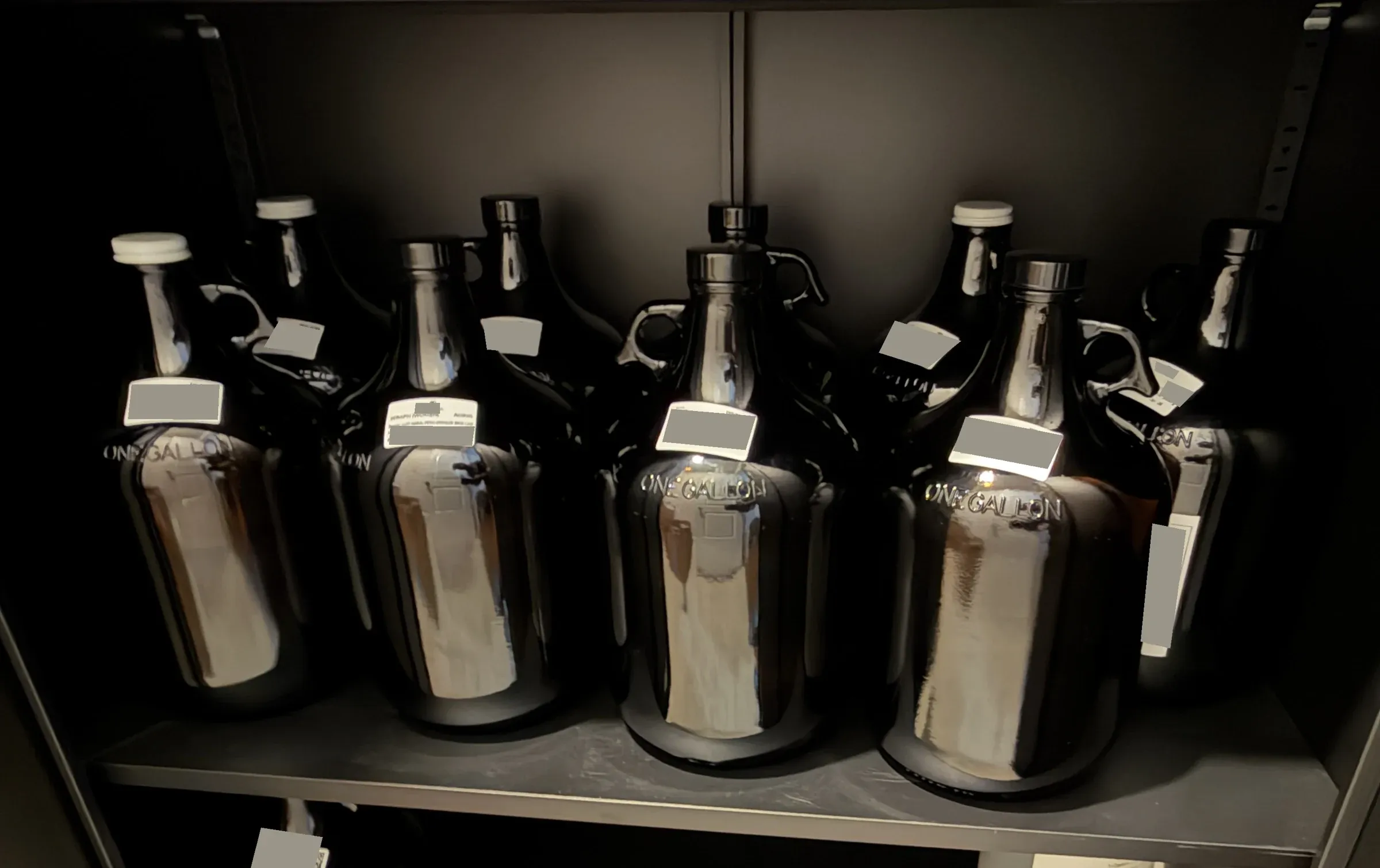
Fragrance batches resting in the atelier’s cabinet. Private label details have been concealed.
For a broader account of how perfume is constructed, Britannica’s entry on perfume is a sound starting point, and Fragrantica remains the most useful public record of how compositions are read by the people wearing them.
Frequently Asked Questions About Maceration Perfume
What is maceration in perfume?
Maceration in this article means the resting stage after a spray is blended and before it is bottled. At ÉCLATAUR the batch is held in amber glass in a dark cabinet, then inspected, cold-filtered and evaluated before release.
How long should perfume macerate?
It depends on the formula and on the maker’s checks, and the trade does not agree on a single answer: accounts from the craft run from a few weeks to several months, with resinous and animalic blends generally given longer, as one French guide to the process gathers them. ÉCLATAUR rests every spray batch on its own production schedule and releases it only when it passes evaluation. The house publishes the practice, not a count of days, because the evaluation is what decides.
Does maceration really make perfume last longer?
This article does not establish a measured increase in longevity from resting alone. The house evaluates its finished batches on skin, but a claim about the effect of resting would need a controlled comparison of the same formula rested and unrested. No percentage improvement is claimed here.
What is the difference between maceration and maturation?
The words are used differently across the trade and among wearers. Here, maceration describes the house’s rest of the finished blend before bottling; maturation usually describes the concentrate resting before it meets its carrier. A change noticed in a bottle after purchase does not reveal either stage of its production history.
Why does ÉCLATAUR rest every batch before release?
Because the house wants to evaluate the composition it intended to make, not the one that exists in the first hours after blending. The rest gives the perfumer a settled batch to inspect, filter and compare with the last one. A batch is not released early to meet demand, and the end of the scheduled rest does not override a failed check.
Can I macerate a perfume at home?
A finished ÉCLATAUR spray has already been through the house’s resting process and does not need more time at home before use. Keeping any bottle sealed, cool and in the dark does it no harm; deliberately exposing it to air, heat or light in the hope of improving it is not a shortcut and can do the opposite.